Search the site
Quick Contact
Email: ernie.clark@wiltshire.gov.ukMobile: 0794 120 1995


News articles from around the Division:
Tuesday April 17, 2012
South West declares environmental drought.
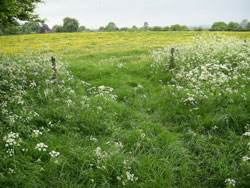
Two years of low rainfall takes its toll.
The South West yesterday moved to environmental drought status after months of exceptionally low rainfall.Water companies have confirmed that public water supplies are currently unaffected, but the lack of rain is taking its toll on the environment, causing problems for wildlife and wetlands.The South West region covers Cornwall, Devon, Dorset, Somerset, Bristol, South Gloucestershire, parts of Hampshire and most of Wiltshire.There have been two successive dry winters in the South West and 16 of the last 25 months have had below average rainfall. The cumulative rainfall total since October 2010 is the lowest for the same period since 1921/22 and is the second driest on record. Since October 2011 there has been only 71 per cent of the rainfall normally expected. In February, it was less than 40 per cent and in March just 35 per cent.All river flows are now much lower than expected for the time of year. Groundwater levels are also very low and starting to impact on rivers, such as chalk streams, with flows more typical of May than March. Reservoir levels are stable but below average.Water companies are modifying their operations in response to the dry weather, urging customers to use water efficiently and increasing efforts to manage leaks. But at present there are no plans for water supply restrictions in the South West, such as hosepipe bans.‘The whole of the South West has moved into environmental drought status, reflecting the impact that this extended dry period is having on the environment and we are asking everyone to use water wisely,’ said Ben Johnstone, Strategic Drought Manager for the Environment Agency in the South West. ‘The amount of water we all use has a direct effect on the amount of water available in rivers and for wildlife.’‘The Environment Agency work to balance the water needs of people, farmers, businesses and the environment and we are working with all sectors to plan ahead to meet the challenges of a continued environmental drought.’ The Environment Agency’s latest drought prospects report (which considers the possible impacts of drought through the spring and summer 2012) can be viewed online at: http://www.environment-agency.gov.uk/homeandleisure/drought/31749.aspxReduced river flow, low water levels and higher water temperature can cause great problems for wildlife, particularly fish and wading birds. The Environment Agency will increase river monitoring and would ask people to ring if they spot fish or wildlife in distress caused by the dry weather. Sections of streams and rivers could run very low and some areas of wetlands could dry out, leading to the loss of valuable habitats which support a unique range of wildlife. The Agency has already advised water abstractors on how they can conserve water and announced new measures to protect important wildlife sites. It has also produced an advisory note on alternative water supplies for domestic borehole, well and spring owners, which might be at risk if dry conditions continue.The Environment Agency would welcome public support in watching out for the water environment and wildlife and to report any concerns on the incident hotline – 0800 807060. This helps to map the developing situation and take appropriate action.