Search the site
Quick Contact
Email: ernie.clark@wiltshire.gov.ukMobile: 0794 120 1995


News articles from around the Division:
Monday January 07, 2013
Fly-tipping prosecutions on the increase.
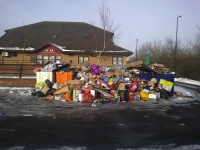
Fly-tipping represents a growing problem.
Significant progress is being made in the battle against fly-tipping in Wiltshire with more successful prosecutions in the first half of this financial year than the whole of 2011/12.Wiltshire Council has revealed its half-yearly figures for enforcement action against waste related offences, and in the six months up to October 2012 it had 13 successful prosecutions against waste offenders. This is 62 percent more than in the whole of the 2011-12 financial year. Council officers also served eight fixed penalty notices in this period and issued 90 statutory notices and one formal caution.Fly-tipping represents a growing problem with incidents steadily increasing year on year. In the case of those who employ rogue businesses to collect their waste, or those who fly-tip their waste themselves, they are passing this cost directly on to the taxpayer.However, household waste is also increasingly being dumped illegally in our towns, villages and countryside. There were 435 incidents of household waste being fly-tipped, this is up by 29 percent on the same period last year, although it is impossible to tell how many of these offences are being committed by householders themselves and how many are being committed by people they have paid to take their waste away.The council advises that anyone who employs someone to take away their waste, whether it is household or business, has a legal duty to ensure they are properly licensed by the Environment Agency.Businesses have to retain waste transfer notes for two years but even householders should make sure they see evidence of a waste carrier’s licence and keep a record of who they have employed. If the waste should then get dumped illegally and there is no evidence of who the waste has been passed to, the householder may find themselves facing charges under related legislation.Fly tipping can be reported to Wiltshire Council online or by calling 0300 456 0100.